
Rastro: traceability system
A system that followed the manufacturing of products at a multinational automotive company for 10 years, confirming that every tracked item was produced correctly and keeping its entire history.
- Industry
- Automotive (multinational)
- Period
- 2012 to 2022
- Technologies
- Delphi, PHP, HTML, CSS, JavaScript, Oracle, OPC Server, TCP/IP
The challenge
On a production line, it is not enough to manufacture: you must prove that the product was made correctly and be able to look up, later, what happened to each part. The company needed a reliable system that worked every day and connected to the factory equipment.
The solution
I developed Rastro, a system that follows selected products during production, checks that they were manufactured correctly, saves the data and lets users look up the parts produced. It was built on two fronts:
Automation (Delphi)
Applications that talk to the line's control devices, such as sensors, cameras and PLCs.
Management and queries (PHP, HTML, CSS and JavaScript)
Web system for data entry, management and queries, used by the administrative and quality teams.
All data is stored in an Oracle database, which guarantees a complete history that is easy to query.
System screens
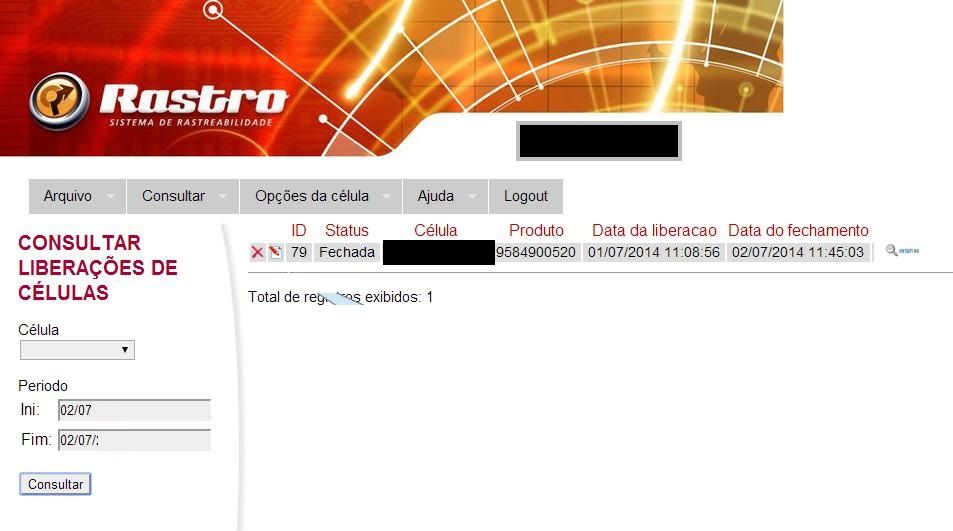
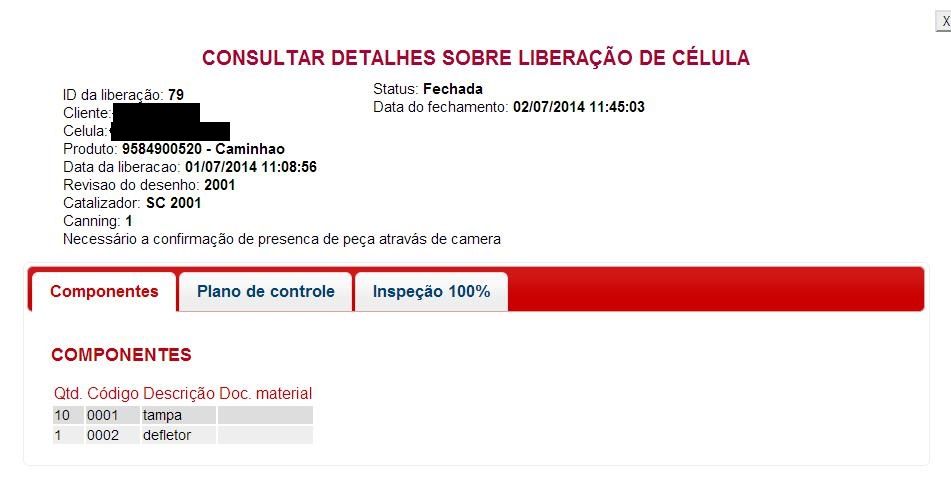
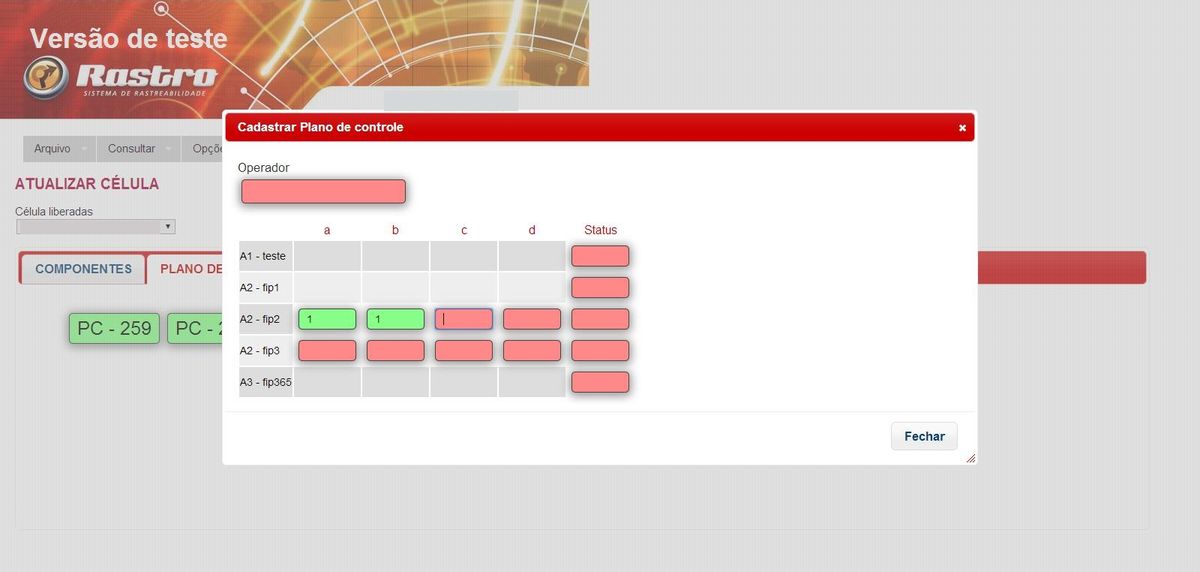
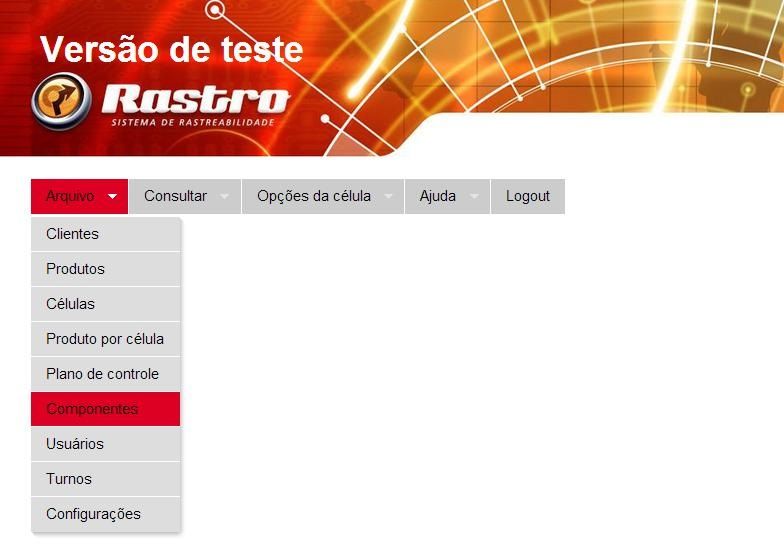
Customer and cell names have been hidden. Click an image to enlarge it.
How it connects to production
Vision inspection
2D vision sensors detect and inspect the objects. Communication is over TCP/IP, using the manufacturer's own data protocol.
Part presence
Inductive sensors wired to a PLC confirm that the part is in place, and the system reads this information through OPC Server.
Support
I supported the system throughout its 10 years of use, with on-site and remote maintenance, so that production was never left standing.
Results
- Digital quality control of the tracked products.
- Complete, traceable history of every tracked part.
- Fewer defective parts reaching the customer.
- A stable system in daily use for a decade.
Get in touchSee other projectsIndustrial automation software